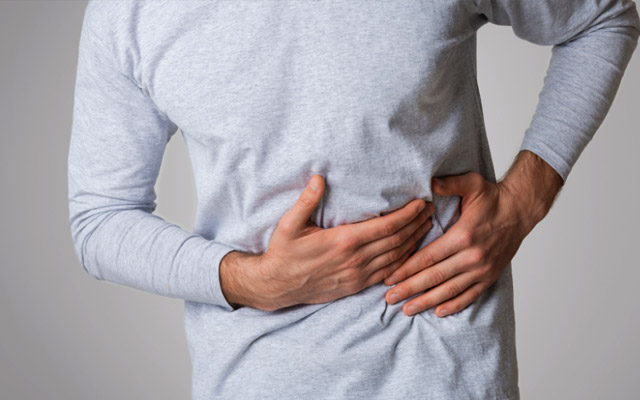
Sudden right-sided abdominal pain is becoming alarmingly common, especially among urban populations.
In the ‘city of joy’, doctors are seeing a steady rise in patients who initially ignored this pain—only to discover later that it was gallbladder disease progressing quietly.
Most people brush it off as gas, acidity, food poisoning, or “something I ate.” But right-sided abdominal pain has a story.
When that story involves the gallbladder, ignoring it can turn a manageable condition into a surgical emergency.
This article explains why right-sided abdominal pain is increasing, how to recognise when it’s gallbladder-related, and when surgery becomes medically necessary—before things spiral.
So, let’s dive in.
What is This Right-Sided Abdominal Pain?
The right-sided abdominal ache or discomfort you feel is otherwise known as Gallbladder pain.
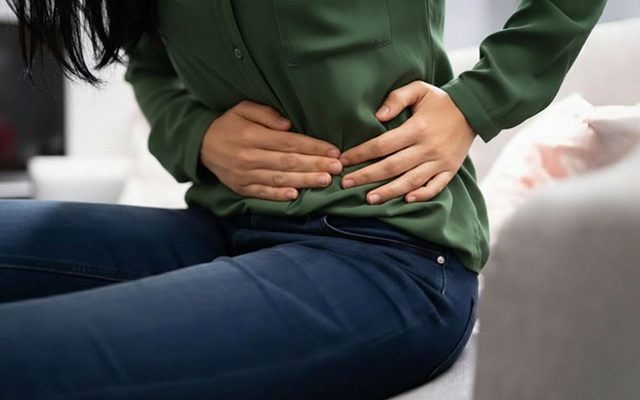
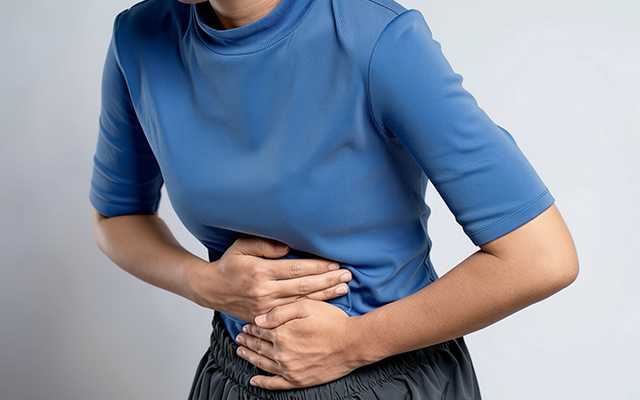
Gallbladder pain typically manifests on the right side of your abdomen, just below the rib cage. This pain can come and go, but it often intensifies after meals, particularly after consuming fatty or greasy foods.
It may be accompanied by nausea, vomiting, and even fever. Left untreated, these issues can worsen, leading to complications such as inflammation or infection
Why Is Sudden Right-Sided Abdominal Pain Increasing?
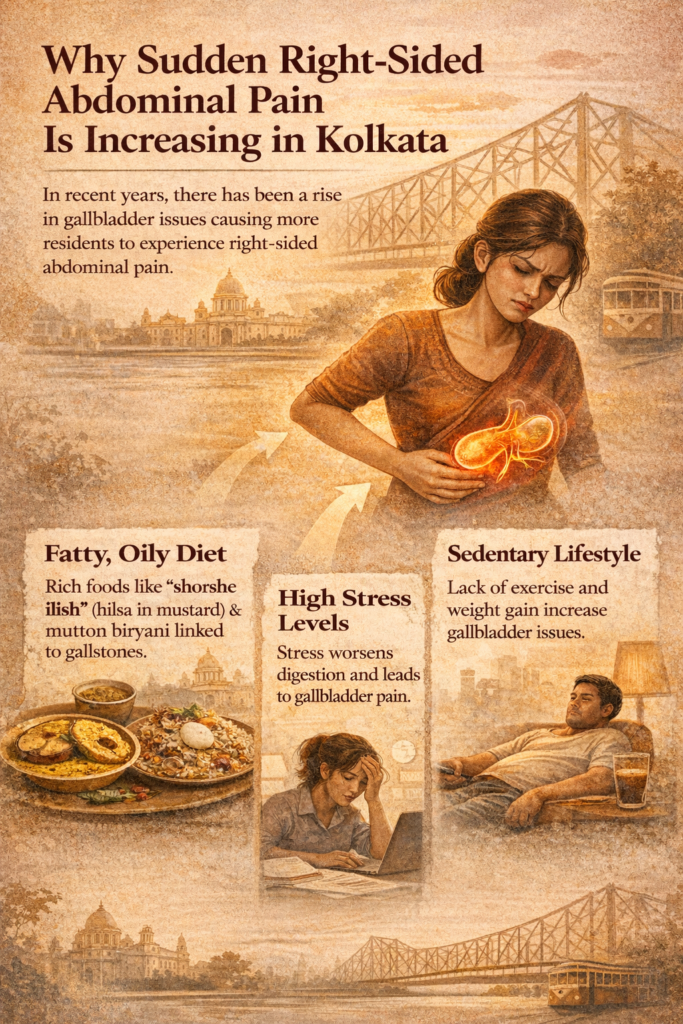
This is the first and most important question, and the answer is not mysterious—it’s modern life.
The Key Reasons Behind the Rise
Right-sided abdominal pain increases due to lifestyle-related gallbladder disease, including gallstones, fatty diets, stress, and delayed diagnosis.
To break it down further, right-sided abdominal pain linked to gallbladder issues is increasing due to:
- Diets high in oil, ghee, fried foods, and irregular meal timing
- Sedentary routines and low physical activity
- Chronic stress that affects digestion and bile flow
- Delayed medical consultations and self-medication
- Overuse of antacids instead of diagnostic scans
Gallbladder disease often starts silently. Pain appears only when the gallbladder is already struggling—usually due to gallstones or inflammation.
Fortunately, Dr Ashutosh Nayak, specialising in minimally invasive laparoscopic gallbladder surgery, provides a reliable solution for quick relief and recovery.
Where Exactly Is Gallbladder Pain Felt?
Gallbladder pain has a specific location and behaviour, and knowing this helps separate it from ordinary stomach discomfort.
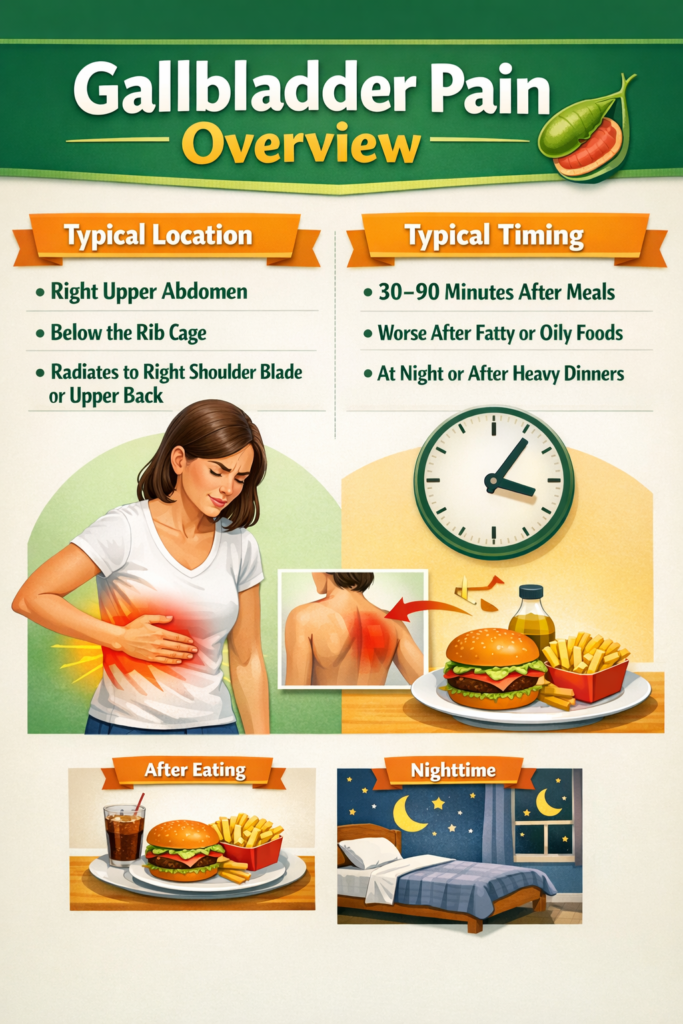
This pain doesn’t resolve permanently with gas medicine. It may settle temporarily—but it returns, usually stronger.
When Right-Sided Pain Is Not “Normal” Digestive Trouble
Many patients delay treatment because the pain is intermittent, not constant. That’s exactly how gallbladder pain behaves in early stages.
Warning Signs People Commonly Ignore
- Repeated pain after meals
- Pain that wakes you from sleep
- Bloating that doesn’t improve
- Nausea without obvious infection
- Fear of eating fatty foods due to pain
This pattern is classic gallbladder disease, not acidity.
Causes of Gallbladder Pain
Gallbladder issues generally stem from the following causes:
- Gallstones: Hard deposits that form in the gallbladder can block bile ducts, leading to intense pain and discomfort.
- Gallbladder Inflammation (Cholecystitis): Inflammation of the gallbladder caused by gallstones or infection can result in persistent pain.
- Biliary Dyskinesia: A condition where the gallbladder doesn’t function properly, leading to digestive issues and pain.
Common Gallbladder Symptoms Seen in Urban Patients
| Symptom | What Patients Feel | What It Means |
| Right-sided abdominal pain | Sharp or dull pain after meals | Gallstones blocking bile |
| Bloating & heaviness | Fullness after eating | Poor bile release |
| Nausea/vomiting | Especially post-meals | Gallbladder irritation |
| Fatty food intolerance | Pain after oily foods | Functional gallbladder failure |
| Fever (advanced) | Pain + fever | Infection |
| Jaundice | Yellow eyes/skin | Bile duct obstruction |
When these symptoms repeat or escalate, the gallbladder is no longer coping.
If you’re experiencing any of the following symptoms, it’s important to consult a Laparoscopic Surgeon in Salt Lake.
What’s Happening Inside the Gallbladder?
Gallbladder disease is not sudden—it’s progressive.
The Typical Progression Timeline
- Cholesterol imbalance → stone formation
- Stones block the bile intermittently.
- Gallbladder contracts against obstruction → pain.
- Repeated attacks → inflammation
- Infection or duct blockage → complications
Pain is not the beginning—it’s the warning bell.
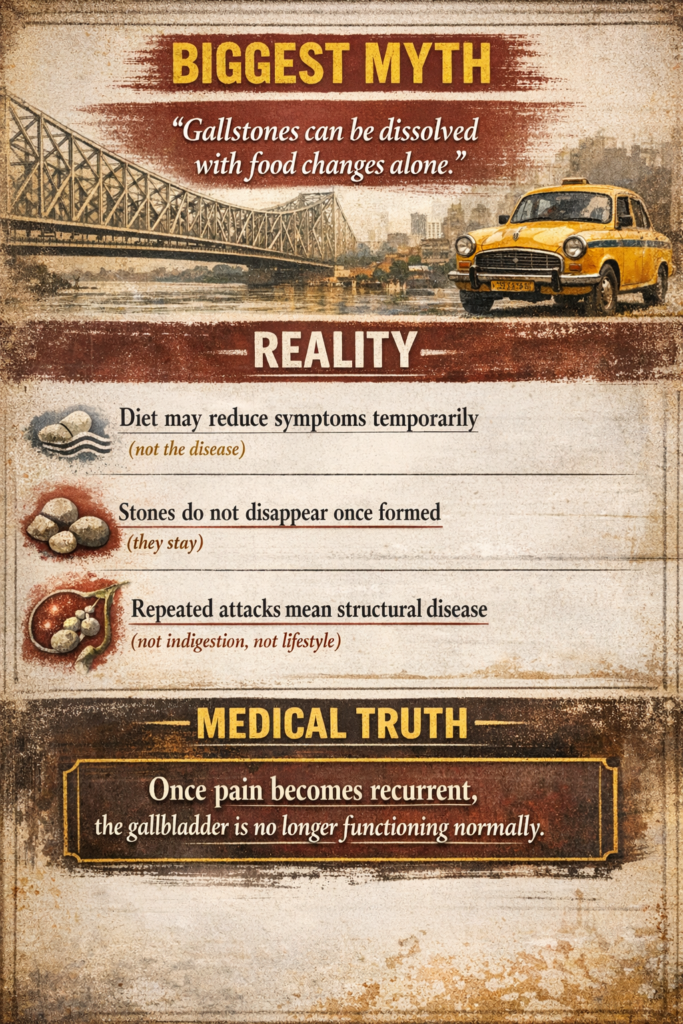
Why Diet Alone Cannot “Fix” Gallstones
Gallstones are solid, stone-like deposits inside the gallbladder. If left untreated, gallstones can block bile flow and lead to repeated pain, infection, or serious complications.
When Does Gallbladder Pain Become Serious?
This is the decision point most patients delay—and regret.
Surgery Becomes Important When:
- Pain episodes are recurrent or worsening
- Gallstones are confirmed on ultrasound
- Inflammation (cholecystitis) is present
- Pain interferes with work, sleep, or eating
- Fever or jaundice appears
At this stage, conservative management is no longer enough.
How Gallbladder Problems Are Diagnosed
Diagnosis is straightforward—but only if done on time.
Common Tests
Ultrasound abdomen
The most common test used to detect gallstones and inflammation
Blood tests
To check for signs of infection or liver function issues
CT/MRI (if needed)
These imaging tests are used to further investigate complications. Early imaging prevents emergency admissions.
Where Treatment Fits In (Condensed but Clear)
For patients with symptomatic gallbladder disease, the globally accepted treatment is gallbladder removal.
The preferred method today is laparoscopic gallbladder surgery in Salt Lake, a minimally invasive approach that removes the diseased gallbladder while preserving digestive function.
Detailed procedural steps, recovery comparisons, and surgical visuals are best presented through an infographic and have been intentionally condensed here.
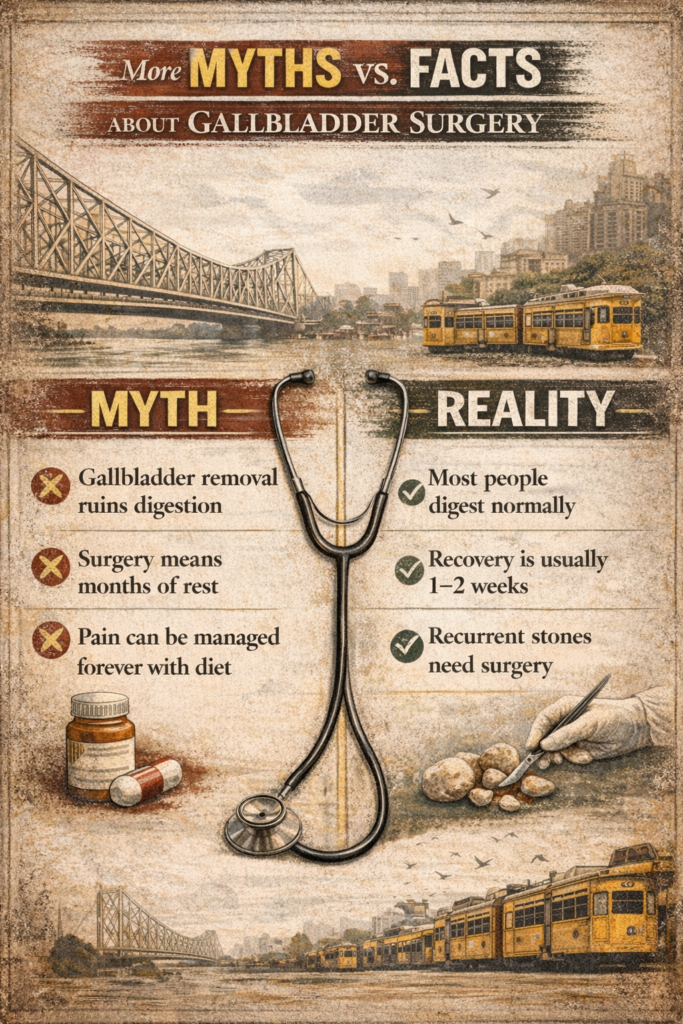
Why Laparoscopic Surgery Is the Standard
Dr Ashutosh Nayak, a leading laparoscopic surgeon in Salt Lake, offers expert gallbladder stone removal surgery, ensuring a quick and safe recovery for his patients.
For symptomatic gallbladder disease — like recurring pain, stones, or inflammation — removal of the gallbladder (cholecystectomy) is often recommended.
The standard today is laparoscopic gallbladder surgery.
- Small keyhole incisions
- Less pain and blood loss
- Faster recovery
- Minimal scarring
- Short hospital stay
Comparison: Laparoscopic Gallbladder Surgery vs Traditional Open Surgery
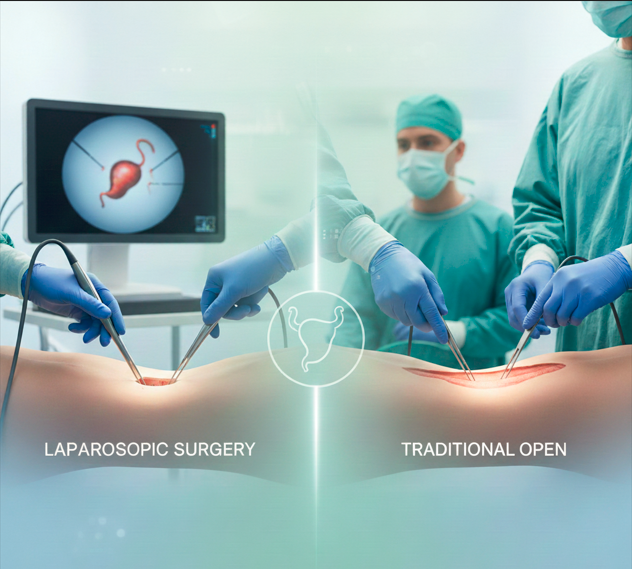
| Factor | Laparoscopic Surgery | Traditional Open Surgery |
| Incision Size | 2–4 small incisions (keyhole) | Larger open cut |
| Recovery Time | 1–2 weeks before resuming normal activity | 4–6 weeks — longer downtime |
| Post‑op Pain | Minimal — less trauma to tissues | More pain, higher discomfort |
| Scarring | Tiny scars, often barely visible | Larger scar — more noticeable |
| Hospital Stay | Often, same-day discharge or overnight stay | Multiple days in hospital |
| Return to Diet/Work | Quicker — light meals within days; most normal activity in 1–2 weeks | Delayed — diet and work resumed much later |
The comparison between laparoscopic gallbladder surgery and traditional open surgery helps local patients consider minimally invasive surgery offered by Dr Ashutosh Nayak.
Life After Gallbladder Removal: What Actually Happens
Many patients fear life without a gallbladder. The truth is simpler.
After surgery:
- Bile flows directly from the liver to the intestine
- Digestion adapts naturally
- Most people eat normally within weeks
- Long-term quality of life improves
Temporary bloating may occur—but chronic pain disappears.
Some General Guidelines For Post-Surgery Recovery Include
- Follow a light, low-fat diet: To allow your digestive system to adjust.
- Stay hydrated: Drink plenty of fluids to assist with recovery.
- Gradual return to physical activity: Start with light activities and gradually increase intensity as recommended by your doctor.
When Should You See a Doctor Immediately?
Do not delay consultation if you experience:
- Persistent right-sided abdominal pain
- Pain with fever or vomiting
- Yellowing of eyes or skin
- Pain disrupting daily life
Early action prevents complications.
Dr Ashutosh Nayak guides you through each step — pre‑surgery preparation, safe procedure, and post‑operative care — to ensure smooth recovery.
Always Remember…

People Also Ask
What causes right-sided abdominal pain related to the gallbladder?
Gallstones, inflammation, or bile duct blockage commonly cause right-sided pain.
How do I know if my pain is gallbladder-related?
Pain after fatty meals, recurring episodes, nausea, and right-upper abdominal tenderness suggest gallbladder disease.
When is surgery required for gallbladder pain?
When pain is recurrent, stones are present, or inflammation develops.
Is laparoscopic gallbladder surgery safe?
Yes. It is the global standard with high safety and fast recovery.
How is laparoscopic gallbladder surgery performed?
Laparoscopic gallbladder surgery involves small incisions and a camera, allowing the surgeon to remove the gallbladder with minimal discomfort and quicker recovery.
What is the recovery time for laparoscopic gallbladder surgery?
Recovery time is typically 1–2 weeks for laparoscopic surgery, compared to 4–6 weeks for open surgery.