
A hernia happens when an internal organ or tissue pushes through a weak spot in the surrounding muscle wall, creating a visible or painful bulge. It commonly affects working-age adults, older people, and women after pregnancy—especially those with long sitting hours or physical strain. Medical evaluation becomes necessary when pain increases, the bulge grows, or daily activity becomes uncomfortable.
For patients seeking safe, timely care, hernia surgery in Kolkata is widely available through Dr Ashutosh Nayak.
“I Think I Have a Hernia” — What’s Actually Happening in Your Body
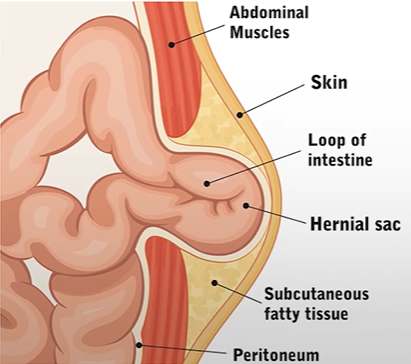
Many patients first notice a hernia as a mild swelling that appears after standing all day, commuting, or lifting something heavy. Initially, it may not cause significant harm. Over time, repeated pressure weakens the muscle further, allowing the hernia to enlarge.
Why hernias don’t heal on their own:
- Muscle weakness does not reverse naturally
- Strain from coughing, constipation, or long sitting worsens it
- Temporary relief measures only mask symptoms
The good news? Hernias are common and treatable when addressed early, and outcomes are usually excellent with proper care.
Types of Hernia You Should Know About (And Why Type Matters)
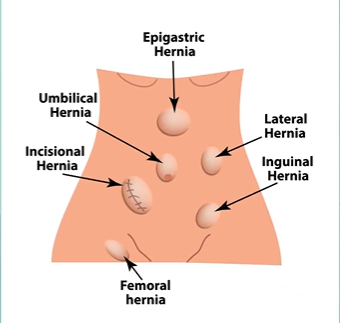
Different hernias require different treatments, depending on the type involved.
| Hernia Type | Commonly Seen In | Why It Matters |
| Inguinal | Adult men | Most common; can enlarge over time |
| Umbilical | Women post-pregnancy, obesity | Discomfort and cosmetic concerns |
| Incisional | After previous abdominal surgery | Higher recurrence risk |
| Hiatal | Older adults | Often managed without surgery |
Understanding the type helps surgeons determine the correct treatment for umbilical/incisional hernias in Kolkata—rather than applying a one-size-fits-all approach.
When Hernia Surgery Becomes Necessary (And When Waiting Is Risky)
Not every hernia requires immediate surgery, but a delay can increase the risk of complications. Surgery is advised when:
- Pain or discomfort interferes with work or sleep
- The bulge increases in size
- There are signs of obstruction or strangulation (sudden pain, vomiting)
Delayed hernia repair increases emergency surgery rates, which are associated with higher complication rates. [Source].
Early planning for hernia surgery in Kolkata enables better preparation and asmoother recovery.
What Treatment Options Exist for Hernia in Kolkata?
The city of joy is also a prominent healthcare hub, offering advanced surgical interventions backed by world-class medical expertise.
Surgical Modalities Include –
Open Hernia Repair
A traditional method using a single incision to repair the defect, often reinforced with mesh. It’s reliable and suitable for many cases, though recovery may be slower.
Laparoscopic (Minimally Invasive) Hernia Repair
Performed through small keyhole incisions using a camera. Laparoscopic hernia repair in Kolkata centres reports faster recovery, less postoperative pain, and earlier return to daily activity for suitable patients.
The ‘Kolkata’ Advantage
Hernia surgery in Kolkata is widely available from experts such as Dr Ashutosh Nayak, an MS, FMAS surgeon with expertise in advanced minimally invasive techniques, ensuring precise repair and faster recovery.
With over a decade of experience and a high success rate, Dr Nayak offers affordable care, including cashless transactions and support under Swasthya Sathi, for various hernia types.
For a better idea, refer to the table below.
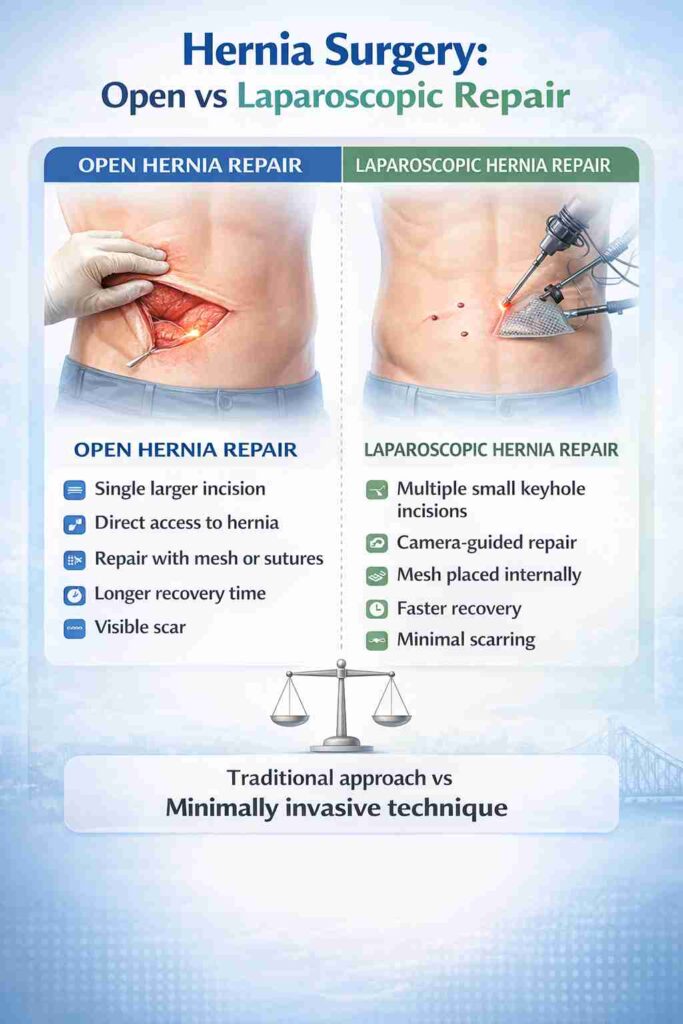
This balanced view reflects the open vs laparoscopic hernia surgery recommendations in India—choice depends on hernia type, patient health, and surgeon experience.
Hernia Surgery Cost in Kolkata — What Patients Should Realistically Expect
Cost is a genuine concern for locals seeking accurate and reliable hernia surgery across the city.
Hernia surgery cost across Kolkata varies based on:
- Hospital type (day-care vs multi-specialty)
- Surgeon expertise
- Hernia complexity and mesh used
- Length of hospital stay and investigations
Planning tips:
- Ask for an all-inclusive estimate
- Check insurance coverage for surgery and mesh
- Budget for tests and follow-ups
Transparent discussion reduces anxiety and prevents surprises.
Risks, Complications & Outcomes — What Doctors Should Explain Clearly
Modern hernia repair is widely regarded as safe, but informed consent is essential before surgery. Patients should clearly understand both short-term and long-term considerations.
Short-term risks may include:
- Mild to moderate pain or discomfort after surgery
- Infection at the incision site
- Bleeding or fluid collection (seroma)
- Temporary effects related to anaesthesia
Long-term considerations can include:
- Hernia recurrence (uncommon with proper technique)
- Persistent or chronic pain in a small percentage of patients
- Mesh-related discomfort in selected cases
Overall outcomes are highly favourable when surgery is carefully planned, performed by an experienced surgeon, and followed by appropriate postoperative care and lifestyle guidance.
A study shows thatrecurrence rates drop significantly when surgery is performed by experienced teams.
Discussions about the risks and recovery of inguinal hernia surgery, as well as the complications and outcomes of hernia surgery, help patients set realistic expectations.
Preparing for Hernia Surgery — What You Should Do Before the Day
Preparation improves outcomes.
Medical checks
- Blood tests, imaging, fitness assessment
Lifestyle steps
- Balanced diet, stop smoking, manage constipation
- Avoid heavy strain before surgery
Key questions to ask
- Mesh vs non-mesh repair
- Expected recovery timeline
- Pain management plan
These conversations align with what to know before hernia surgery India. Plus, it acts as a practical hernia surgery prep and recovery guide.
Common Tests and Assessments Used in Hernia Evaluation
Before any treatment decision is made, hernia evaluation follows a standard medical assessment process to clearly and objectively understand the condition.
Clinical examination usually includes:
- Assessing the location and size of the bulge
- Observing changes during standing, coughing, or straining
- Checking whether the hernia reduces when lying down
- Identifying tenderness or associated discomfort
Imaging tests may be advised when:
- The hernia is small or not clearly visible
- Symptoms persist without obvious findings
- There is a history of previous abdominal surgery
Common imaging tools include ultrasound for groin or abdominal wall hernias and CT scans for complex or recurrent cases.
General health assessments often involve:
- Routine blood tests
- Cardiac or fitness evaluation when required
- Review of existing medical conditions
Across Kolkata centres providing hernia surgery, these assessments help accurately document the condition, establish a baseline, and support informed discussions on timing, approach, and expected recovery—without assuming immediate intervention.
What to Expect After Hernia Surgery — Recovery Without Myths
Hospital stay
- Many cases are day-care; some need overnight observation
Recovery timeline
- Days 1–7: wound care, gentle walking
- Weeks 2–3: gradual return to routine
- Weeks 4–6: resume most activities with guidance
Watch for
- Fever, increasing pain, redness, swelling
Clear after-care instructions make outcomes of hernia surgery in Kolkata smoother and more predictable.
Making an Informed Decision Without Rushing
Living with a hernia often means quietly adjusting—avoiding strain, postponing travel, or tolerating discomfort—until it begins to affect daily life. At that stage, clarity matters more than urgency.
Understanding what a hernia is, when surgery is truly needed, and what recovery realistically looks like allows you to decide without fear or pressure.
When planned thoughtfully, hernia surgery in Kolkata is a safe and effective solution that restores comfort and confidence. The most important next step is a conversation—one that answers your questions, respects your pace, and focuses on long-term well-being.
Book a consultation with Dr Ashutosh Nayak today.
People Also Ask
Is hernia surgery painful?
Some discomfort is normal after surgery, but pain is usually well-controlled with medicines. Minimally invasive procedures often cause less post-operative pain.
How many days of rest are needed after hernia surgery?
Most people return to light activities within 1–2 weeks. Heavy work or lifting may take longer.
How long does full recovery take?
Complete recovery usually takes about 4–6 weeks, depending on the type of hernia and the surgical method.
Can a hernia come back after surgery?
Recurrence is uncommon when surgery is done correctly and recovery instructions are followed.
Is mesh safe in hernia surgery?
Yes. Modern surgical mesh is widely used in India and considered safe when chosen appropriately.
Is hernia surgery done as day care in Kolkata?
Many hernia surgeries are performed as day-care procedures. Some cases may need overnight observation.
What happens if hernia surgery is delayed?
Delay can lead to increased pain and a larger hernia. In rare cases, emergency complications may occur.
When should I see a doctor for hernia symptoms?
See a doctor if the bulge becomes painful, increases in size, or affects daily activities. Sudden pain or swelling needs urgent evaluation.