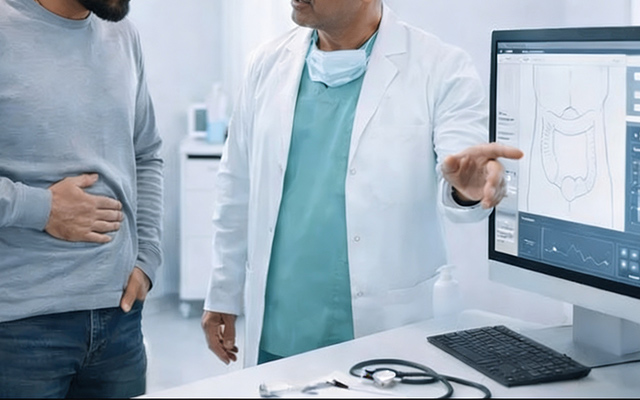
Warning signs of a dangerous hernia include worsening pain, swelling that cannot be pushed back, nausea, vomiting, and changes in bowel movements.
These symptoms may indicate a medical emergency such as a strangulated hernia. Seeking timely evaluation can prevent serious complications and improve outcomes.
If you’re considering hernia surgery, Dr. Ashutosh Nayak, in Kolkata recommends acting early to prevent future complications.
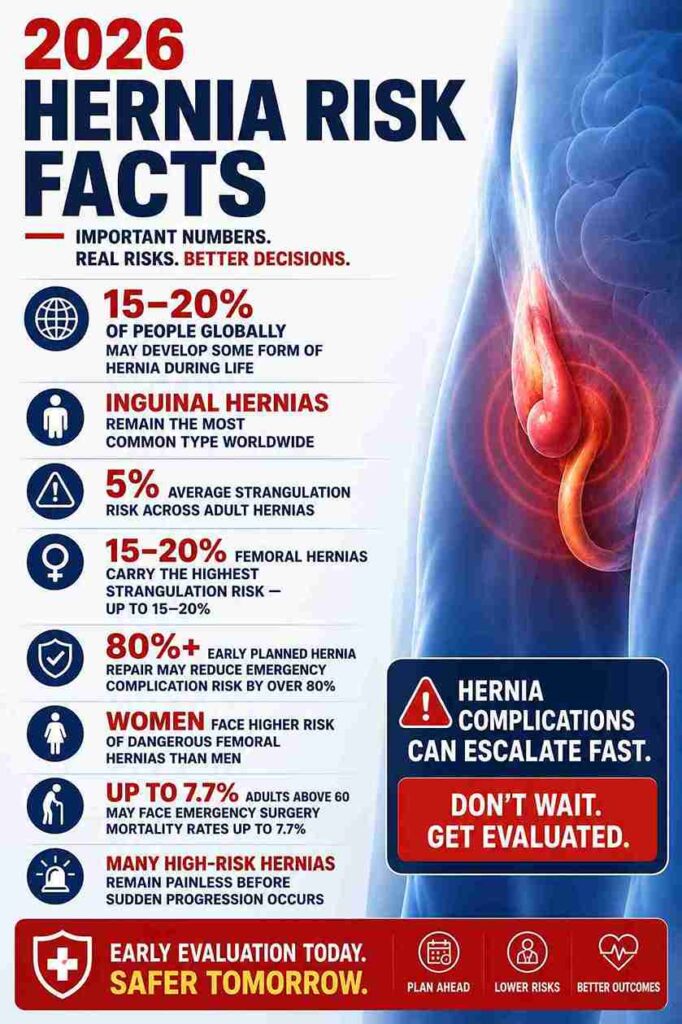
Here are 10 warning signs your hernia may be becoming dangerous.
1. Everyday Movement Starts Feeling More Difficult
One of the earliest signs of progression is often not severe pain — but changing physical confidence during routine movement. Many individuals begin noticing:
- Discomfort while climbing stairs
- Pulling sensations during walking
- Pressure after standing longer
- Strain while bending
- Hesitation lifting grocery bags
- Difficulty getting out of bed comfortably
These adjustments usually develop slowly.
If your daily movements are changing, your hernia may be progressing. Dr Ashutosh Nayak often treats patients who delayed care until mobility was already affected.
2. Mild Heaviness Changes Into Sharper Pain
Most hernias start with dull pressure or occasional heaviness rather than intense pain.
Concern increases when the sensation becomes:
- Sharper
- Constant
- Movement-triggered
- Difficult to ignore
- More frequent than before
Many people notice worsening discomfort while:
- Coughing
- Standing
- Lifting objects
- Sneezing
- Changing body position suddenly
The important concern is not simply pain severity. Doctors also assess whether the physical behaviour has changed compared to earlier stages.
Pain that becomes progressively sharper may reflect increasing strain around weakened tissue or internal structures becoming trapped under pressure.
3. The Swelling Stops Going Back Inside
Some hernias remain soft and reducible for years. This means the protrusion temporarily slips back inward while resting or lying down.
A different situation develops when the swelling:
- Remains visible constantly
- Becomes firmer
- Feels tighter than before
- No longer reduces comfortably
- Creates pressure while standing
A permanently protruding bulge often deserves closer surgical evaluation rather than continued observation alone.
Types of Hernias Commonly Seen in Adults
| Hernia Type | Common Location |
| Inguinal Hernia | Groin region |
| Umbilical Hernia | Around the belly button |
| Incisional Hernia | Previous surgical scar area |
| Femoral Hernia | Upper thigh or lower groin |
| Hiatal Hernia | Upper stomach through the diaphragm |
| Epigastric Hernia | Upper middle abdomen |
Dr. Ashutosh Nayak, a hernia specialist in Kolkata, advises not to ignore swelling that suddenly changes after long stability.
4. Digestive Problems Start Appearing Alongside the Hernia
Hernia progression does not always remain limited to visible swelling.
Many adults initially mistake digestive symptoms for acidity, indigestion, or dietary problems. However, bowel-related changes developing together with abdominal swelling can become medically important.
Warning signs may include:
- Repeated bloating
- Nausea
- Fullness after small meals
- Constipation
- Difficulty passing gas
- Reduced appetite
- Abdominal tightness
Digestive symptoms often become more concerning when they appear together with increasing abdominal pressure or worsening discomfort near the hernia site.
5. The Area Becomes Red, Warm, or Darker
Visible skin changes around a hernia should never be ignored casually. Some individuals notice:
- Redness
- Unusual warmth
- Stretched shiny skin
- Increasing tenderness
- Darker discoloration around the swelling
Unlike ordinary irritation, these changes frequently appear together with growing tightness or sensitivity.
Progressive skin changes can sometimes suggest rising stress around trapped tissue or reduced blood circulation internally.
Dr Ashutosh Nayak notes that changes in swelling can indicate worsening beneath the abdominal wall.
6. Fever and Vomiting Develop Together
A stable hernia usually does not create fever or repeated vomiting.
Watch out for these symptoms:
- Fever
- Chills
- Nausea
- Inability to tolerate food
- Repeated vomiting
- Worsening abdominal pain
When these symptoms begin developing together, doctors become more concerned about possible internal complications.
Many people delay seeking help because the hernia itself may have existed quietly for years before sudden escalation occurs.
However, systemic symptoms developing alongside abdominal swelling deserve urgent medical evaluation instead of home management alone.
7. The Bulge Starts Enlarging Faster Than Before
Most hernias enlarge gradually over long periods. A noticeable increase in size within weeks or months changes the overall clinical picture significantly.
People commonly postpone evaluation because the swelling may still remain painless initially. However, faster enlargement often reflects:
- Increasing abdominal wall weakness
- Rising internal pressure
- Progressive tissue strain
- Worsening structural support
Rapid physical change is rarely considered routine in long-standing hernias.
Diagnostic Tests Commonly Used Before Hernia Repair
| Test or Evaluation | Why It May Be Recommended |
| Physical examination | Assesses abdominal weakness and swelling behaviour |
| Ultrasound scan | Visualises soft tissue protrusion |
| CT scan | Evaluates complex or recurrent cases |
| Blood investigations | Reviews overall surgical readiness |
| Medical history review | Identifies contributing medical factors |
| Fitness assessment | Determines anesthesia suitability |
In Kolkata, Dr. Ashutosh Nayak uses imaging to help you choose the right time for hernia surgery—only when it’s truly needed.
8. Even Light Pressure Starts Feeling Uncomfortable
Some hernias become unusually sensitive over time.
Activities that previously caused no irritation may suddenly feel uncomfortable, including:
- Wearing tighter clothing
- Touching the area lightly
- Changing posture
- Walking longer distances
- Sitting in one position too long
The swelling may begin feeling:
- Tender
- Inflamed
- Tense
- Difficult to tolerate during movement
This growing sensitivity sometimes reflects rising internal strain around weakened tissue.
Many people unknowingly begin adjusting posture or avoiding certain positions subconsciously as symptoms progress further.
9. Pressure and Tightness Build Up Through the Day
Dangerous progression does not always appear as dramatic pain immediately. Some individuals mainly experience:
- Abdominal heaviness
- Tightening after meals
- Pressure buildup while standing
- Fullness worsening toward evening
- Clothing feeling tighter around the abdomen
These physical changes can gradually interfere with comfort throughout the day.
When pressure sensations become more persistent or physically limiting, doctors often evaluate whether the hernia is placing increasing strain on nearby structures internally.
10. Normal Routine Activities Start Affecting Quality of Life
One of the clearest warning signs is when the hernia begins changing how someone lives day to day. Many adults gradually stop:
- Exercising comfortably
- Lifting household items
- Standing for longer periods
- Travelling confidently
- Walking longer distances
Some avoid social activity or physical work simply because movement no longer feels predictable.
A hernia often becomes dangerous not only when emergency complications appear, but when the body steadily loses normal physical freedom through progression that continues getting ignored.
Questions People Commonly Ask Before Hernia Repair
| Common Question | Why People Ask It |
| “How long will recovery take?” | Helps plan work and routine |
| “Will hospital admission be necessary?” | Concerns regarding hospital stay |
| “Is laparoscopic surgery suitable for me?” | Interest in faster recovery |
| “When can lifting or exercise restart?” | Daily activity planning |
| “Can the hernia return later?” | Long-term outcome concerns |
| “How soon can I resume work?” | Professional responsibilities |
People exploring hernia surgery in Kolkata often seek evaluation once symptoms begin interfering with confidence, mobility, or everyday independence rather than pain alone.
Why Planned Hernia Repair Is Often Safer Than Emergency Surgery
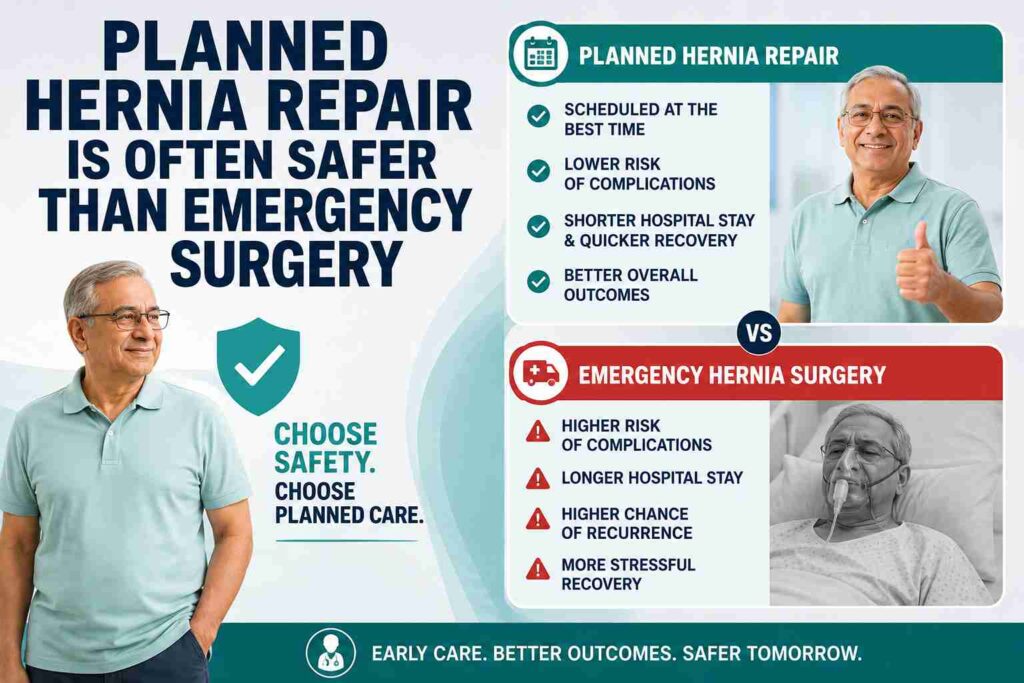
The goal is not rushing every hernia toward surgery. The real objective is identifying when waiting may eventually create a more complicated medical situation later.
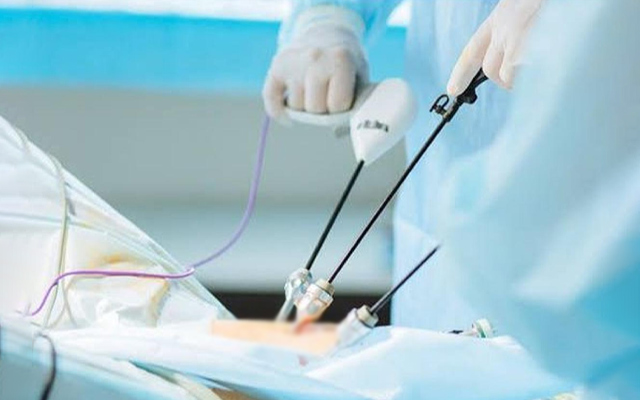
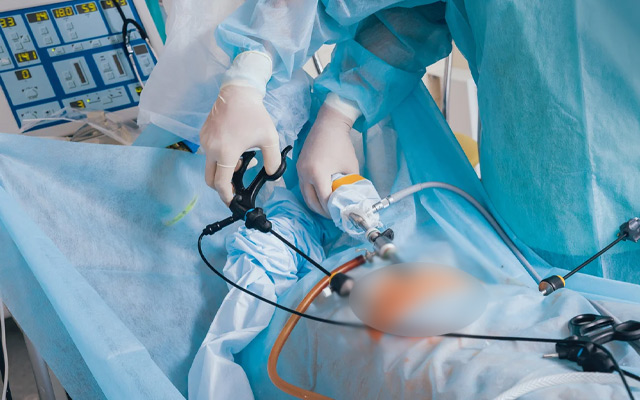
Modern laparoscopic techniques often allow:
- Smaller incisions
- Shorter hospital stay
- Earlier walking
- Faster return to routine
- Less postoperative strain
Recovery also tends to feel smoother when treatment happens before:
- Bowel obstruction
- Severe inflammation
- Trapped tissue
- Emergency hospitalisation
Final Takeaway
Many dangerous hernia complications develop gradually before suddenly becoming medically urgent.
Changes involving movement, swelling behaviour, digestion, pressure, or physical confidence should never be ignored simply because symptoms fluctuate temporarily.
For individuals considering hernia surgery in Kolkata, timely specialist evaluation from Dr Ashutosh Nayak may help reduce emergency complications while supporting safer recovery planning and improved long-term physical comfort.
Call 084207 97171 now to schedule an appointment today.
People Also Ask
Can coughing make a hernia enlarge faster?
Repeated coughing increases abdominal pressure, which can gradually place additional strain on weakened muscle areas and contribute to faster hernia enlargement in some individuals.
Are hernias more common after previous abdominal surgery?
Yes. Surgical scars can sometimes weaken abdominal tissue, increasing the likelihood of incisional hernias developing later around the operated area.
Can weight gain affect hernia progression?
Excess body weight increases pressure inside the abdomen, which may worsen muscle weakness and place additional strain on existing hernias over time.
Is it safe to keep exercising with a hernia?
Light activity may remain possible in selected cases, but exercises involving heavy lifting, abdominal strain, or sudden pressure changes can sometimes worsen the condition.
Can smoking affect hernia healing or recovery?
Yes. Smoking may interfere with tissue healing, increase coughing-related abdominal pressure, and negatively affect recovery after surgical repair.
Why do some hernias feel worse at the end of the day?
Longer periods of standing, walking, lifting, or physical exertion throughout the day can increase abdominal strain, making swelling or heaviness feel more noticeable later in the evening.