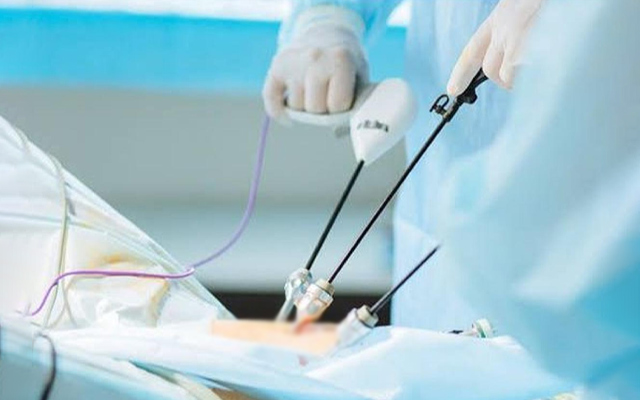
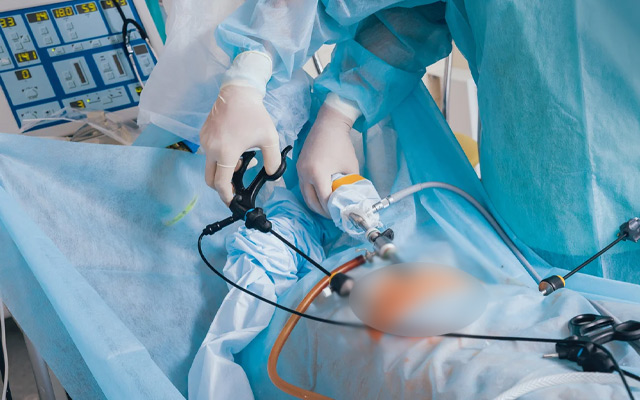
Laparoscopic gallbladder surgery is performed using four small, carefully placed incisions that allow a camera and specialised instruments to remove the gallbladder with accuracy. This approach enhances visibility, minimises discomfort, and supports quicker recovery compared to traditional open procedures.
Laparoscopic gallbladder removal uses multiple small entry points to provide precise access, better control, and improved surgical outcomes with minimal tissue disruption.
Instead of relying on a single large incision, surgeons use a structured, minimally invasive setup that improves control and consistency during the procedure.
If you’re considering laparoscopic gallbladder surgery, understand how these access points work to feel confident and in control.
Then choose Dr. Ashutosh Nayak for precise, patient-focused care tailored to your needs at his Kolkata practice.
Why Are There Four Small Cuts in Laparoscopic Gallbladder Surgery?
The procedure uses four access points to create a controlled surgical environment.
- One port introduces the camera for internal visualisation
- Two ports allow instruments to perform dissection and removal
- One port stabilises and positions the gallbladder
This configuration enables steady handling and precise movements throughout the operation.
What is a Four-Port Laparoscopic Cholecystectomy?
This is the standard technique used for minimally invasive gallbladder removal, involving four entry points for coordinated surgical access.
It is widely adopted because it offers:
- Clear visualisation of internal structures
- Balanced instrument control
- Greater procedural precision
When Do You Need Gallbladder Surgery?
Surgery is usually advised when symptoms begin to interfere with daily life or complications arise.
- Repeated abdominal pain or discomfort
- Frequent gallstone-related episodes
- Digestive disturbances after meals
- Difficulty tolerating fatty foods
Gallbladder conditions rarely resolve without treatment and may progress over time.
What Happens If You Delay Gallbladder Treatment?
Postponing treatment can lead to increasing symptoms and added risk.
- Pain episodes may become more frequent and intense
- Inflammation or infection may develop
- Blockage of bile flow can occur
- Surgical complexity may increase later
Early intervention is typically simpler and leads to more predictable outcomes.
When Should You Consult a Doctor for Gallbladder Symptoms?
Recognising symptoms early helps prevent complications and allows timely treatment.
- Recurrent pain in the upper abdomen
- Discomfort after eating, especially fatty meals
- Nausea, bloating, or indigestion
- Previously diagnosed gallstones with new symptoms
Seeking medical advice early can help avoid emergency situations and simplify treatment.
Where Are the Four Cuts Usually Made?
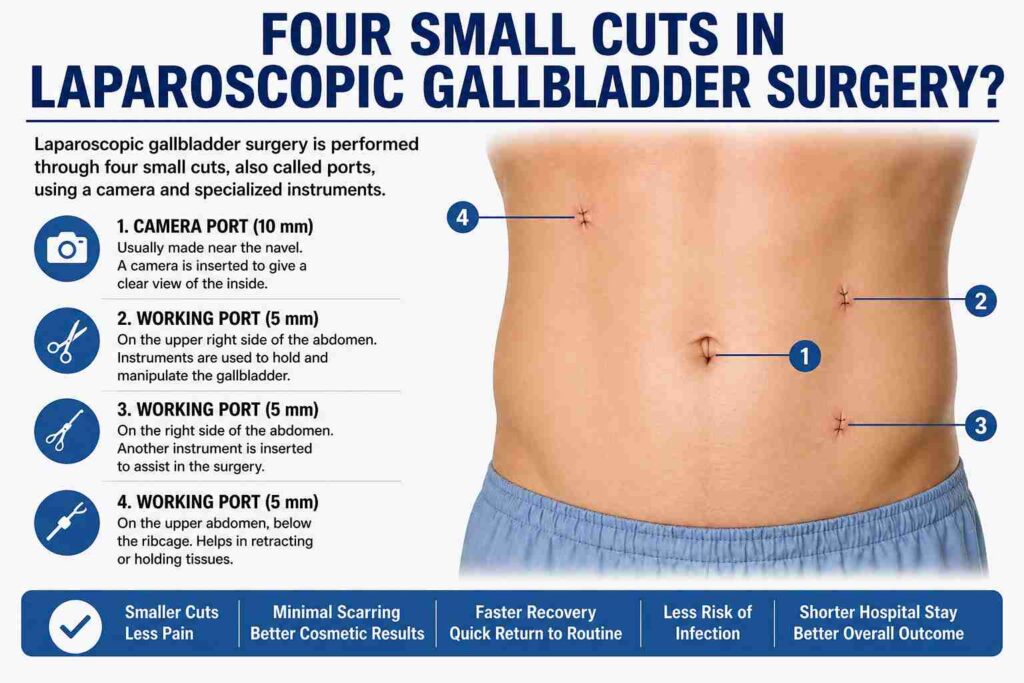
The access points are strategically positioned to optimise visibility and instrument movement.
- Umbilical port: for camera access
- Epigastric port: for primary instrument control
- Two lateral ports: for handling and removal
This arrangement supports efficient and controlled surgical workflow.
Why Four Small Cuts Are Better Than One Large Open Cut
Multiple small entry points offer clear advantages over open surgery.
- Reduced postoperative discomfort
- Minimal visible scarring
- Faster return to daily activities
- Lower risk of wound-related complications
| Feature | Laparoscopic Approach | Open Surgery |
| Pain | Less | More |
| Scars | Minimal | Prominent |
| Recovery | Quicker | Slower |
Minimally invasive techniques improve patient comfort while maintaining surgical effectiveness.
Cost of Laparoscopic Gallbladder Surgery in Kolkata
The overall cost depends on several clinical and logistical factors:
- Severity of the condition
- Type of hospital and facilities
- Surgical expertise
- Postoperative care requirements
Opting for experienced surgical care often contributes to smoother recovery and better long-term results.
Success Rate of Laparoscopic Cholecystectomy
This procedure demonstrates consistently high success rates when performed under experienced surgical supervision.
- Stable and reliable outcomes
- Low complication rates
- Faster return to normal routine
Proper technique and planning significantly improve overall results.
How Long Does Laparoscopic Gallbladder Surgery Take?
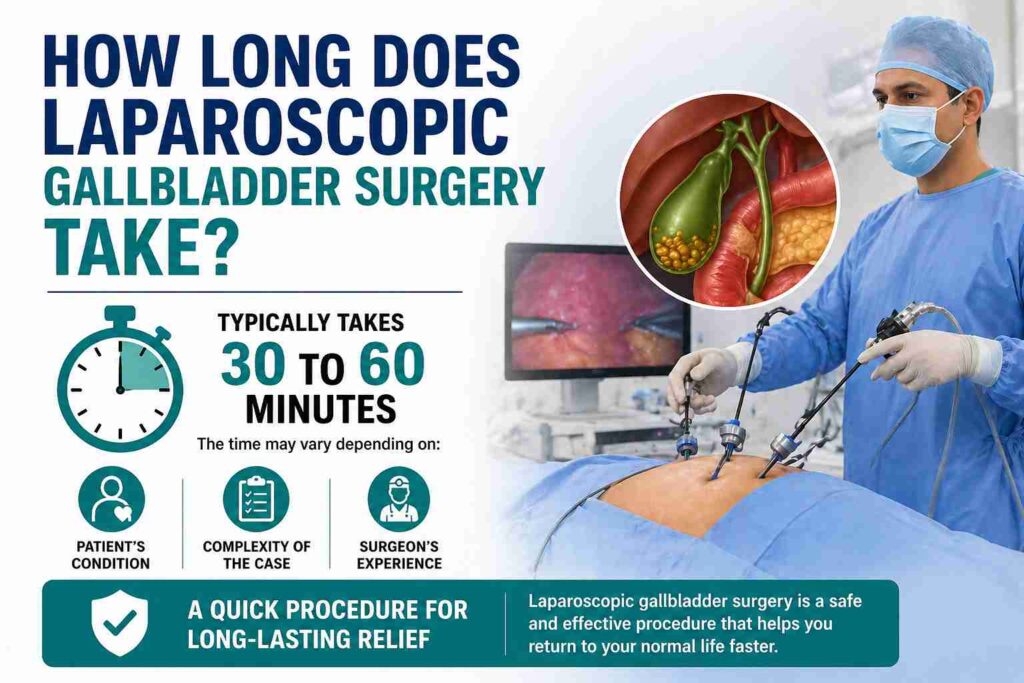
The duration of the procedure can vary depending on individual factors.
- Typically lasts between 30 minutes to 1 hour
- May take longer in complex cases
- Depends on patient condition and surgical findings
Most procedures are completed within a short duration due to the efficiency of minimally invasive techniques.
Benefits vs Risks of Laparoscopic Gallbladder Surgery
Understanding both sides helps patients make informed decisions.
| Benefits | Risks |
| Faster recovery | Minor infection risk |
| Less postoperative discomfort | Temporary pain |
| Small scars | Rare complications |
| Early return to routine | Anaesthesia-related risks (rare) |
This balance highlights why the procedure is widely recommended while still requiring proper evaluation.
Why Some Patients May Have Three Cuts Instead of Four
Simply because the fourth port is often considered unnecessary for experienced surgeons.
While three-port surgery may be suitable in simpler cases, the four-port approach remains the preferred method in most situations due to better control and overall procedural safety.
Three-Port vs Four-Port Laparoscopic Gallbladder Surgery: Overview Table)
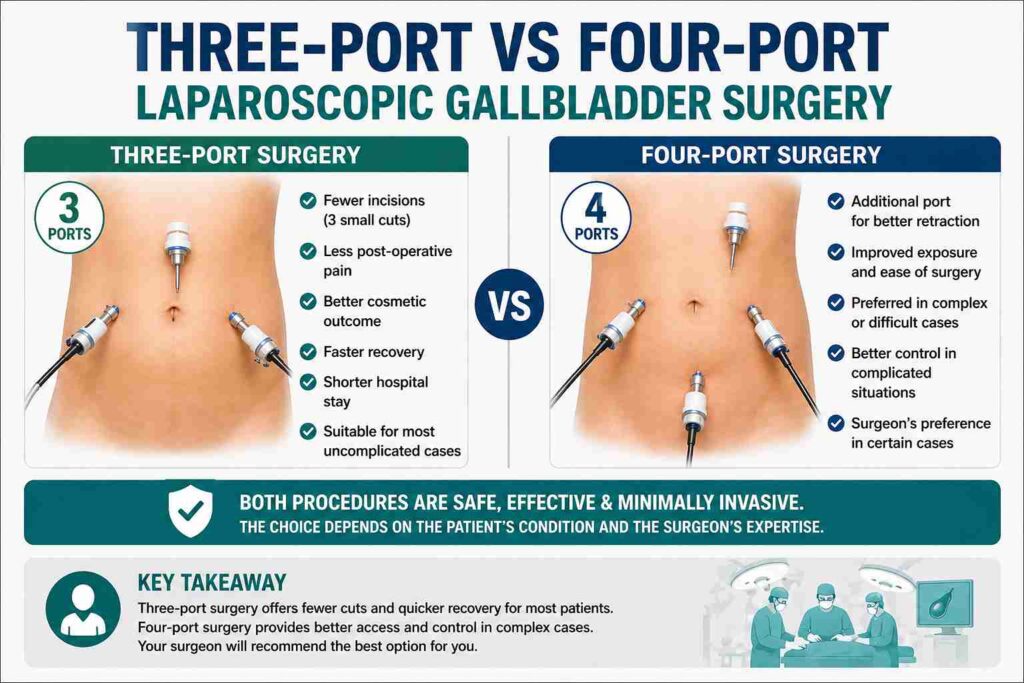
| Feature | Four-Port Technique | Three-Port Technique |
| Control of instruments | More stable and precise | Slightly limited in complex cases |
| Visibility | Better visual access | May be reduced in difficult anatomy |
| Safety margin | Higher in most situations | Suitable for selected simple cases |
| Surgical flexibility | Greater flexibility | Less adaptable if complications arise |
| Standard use | Widely accepted standard | Used selectively |
What Happens During Laparoscopic Gallbladder Surgery Step by Step?
- Small entry points are created
- A laparoscope and instruments are inserted
- Carbon dioxide is used to create working space
- The gallbladder is carefully separated
- It is removed through one of the ports
- The incisions are closed
This method ensures controlled execution with minimal disruption.
How to Prepare for Four-Port Laparoscopic Gallbladder Surgery in Kolkata
- Preoperative evaluation and investigations
- Following fasting instructions
- Adjusting medications if required
- Planning assistance during recovery
Do the Small Cuts Leave Permanent Scars?
No. The incisions typically heal into subtle marks that fade over time.
- Scars are small and less noticeable
- Gradual improvement occurs over weeks
- Proper care supports better healing
How Painful Are the Incisions After Surgery?
Postoperative discomfort is generally mild and short-lived.
- Mild soreness in the initial days
- Gradual improvement within 48–72 hours
- Easily manageable with medication
Recovery After Laparoscopic Gallbladder Surgery
Recovery is usually quick and uncomplicated.
- Discharge within 24 hours in most cases
- Early movement encouraged
- Return to routine activity within a few days
Activities to avoid temporarily
- Heavy lifting
- Strenuous exertion
When Can You Return to Work After Gallbladder Surgery?
Return to work depends on the type of activity and individual recovery.
- Desk-based work: within a few days
- Light physical activity: around 1 week
- Strenuous work: a few weeks
Gradual return ensures proper healing and avoids unnecessary strain.
Diet After Gallbladder Surgery
- Begin with light, easily digestible meals
- Limit high-fat foods initially
- Gradually reintroduce a balanced diet
- Maintain adequate hydration
Life After Gallbladder Removal
- Digestion stabilises over time
- Routine activities continue as usual
- Long-term lifestyle impact is minimal
When Laparoscopic Surgery May Be Converted to Open Surgery
In certain situations, conversion may be required to ensure optimal outcomes.
- Severe inflammation
- Presence of scar tissue
- Limited intraoperative visibility
The decision is always made with patient well-being as the priority.
Who Needs Laparoscopic Gallbladder Surgery?
This procedure is commonly recommended for:
- Symptomatic gallstones
- Recurrent pain episodes
- Gallbladder inflammation
- Obstruction of bile flow
Timely treatment helps prevent complications and supports better outcomes.
Let’s Recap
The four small cuts in laparoscopic gallbladder surgery are a precision system—not a formality. Each incision is placed to maximize visibility, control, and safety while minimizing trauma, pain, and recovery time.
If you are experiencing persistent symptoms, don’t wait for them to worsen. Consult Dr Ashutosh Nayak for four-port laparoscopic gallbladder surgery in Kolkata.
Backed by 20K+ surgeries, 10+ years of experience, and 50K+ satisfied patients, his expertise isn’t claimed, it’s proven in outcomes.
Book a consultation today to take a confident step toward recovery.
People Also Ask
Can stress make gallbladder symptoms feel worse?
Stress does not directly cause gallstones, but it may worsen bloating, abdominal discomfort, digestive irregularities, and symptom sensitivity in some patients.
Why do some people experience gallbladder attacks mostly at night?
Gallbladder pain often becomes more noticeable at night because digestion slows after heavy evening meals, especially meals high in fat or oil.
Can rapid weight loss increase the risk of gallstones?
Yes. Sudden weight loss can change bile composition and increase the likelihood of gallstone formation, particularly during crash dieting or extreme calorie restriction.
Is gallbladder surgery more difficult in diabetic patients?
Diabetes may increase the risk of infection and delayed healing if blood sugar levels are poorly controlled, which is why careful preoperative evaluation is important.
Can dehydration affect gallbladder health?
Poor hydration may contribute to bile concentration changes over time, which can support gallstone formation in some individuals.
Why are gallstones more common in women?
Hormonal factors, pregnancy-related changes, and estrogen levels may increase the risk of gallstone formation in women compared to men.
Can untreated gallstones affect the pancreas?
Yes. In some cases, gallstones can block nearby ducts and trigger pancreatitis, which is a potentially serious inflammatory condition affecting the pancreas